Slide 1 of 4
Slide 2 of 4
Slide 3 of 4
Slide 4 of 4
Your Browser Is No Longer Supported. Please use an alternative browser to improve your experience and security.
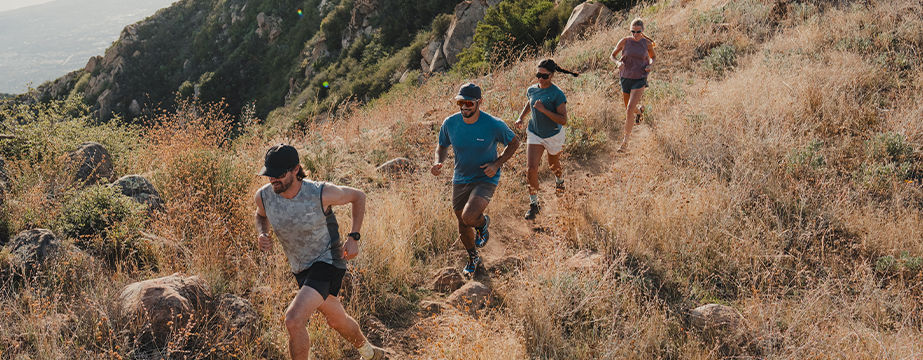
Trail running looks simple enough until you get a few miles down the trail and everything starts to change.
You start out feeling comfortable, then settle into a climb and heat up fast. A few minutes later, the trail leads through a stretch of shade cast by towering firs, and your temperature shifts again. You need an outfit that can adapt.
Choosing what to wear trail running comes down to finding clothing that handles those changes in stride. This article breaks down how to dress so you can build a setup that works across different terrain, weather, and run lengths.
The terrain, grade, and sun exposure can all change within a single stretch of trail.
Climbs spike your output and sweat builds fast. When the trail levels out or leads into shade, that moisture cools, which can sap your core temp if your shirt stays wet with sweat.
Footing and exposure change throughout the run. Rocks, roots, and uneven ground affect your stride, while sections of sun, shade, and wind affect how your body feels. Your clothing needs to move with you and handle those changes without becoming a distraction.
A trail running setup works best when it can adapt as conditions change.
Start with a base layer that manages sweat and stays comfortable as your pace increases. From there, add pieces based on how long you’ll be out, how exposed the route is, and how quickly conditions might shift.
Most trail running gear lists include a mix of layers, but the key is choosing pieces that work together instead of treating them as separate items.
A simple system of trail running essentials usually includes:
The first layer you wear sets your baseline for comfort during the run.
On a climb, sweat builds fastest across your upper body. If your shirt traps that moisture, it starts to cling and limits airflow. Over the next few miles, that can get very uncomfortable, especially when the trail cools down or wind picks up.
For warm conditions or runs with a lot of elevation changes, a shirt like the Men’s Windridge UPF 50 Short-Sleeve T-Shirt uses a lightweight, moisture-wicking knit to keep you comfortable. The UPF 50 rating also reduces sun exposure during long stretches without shade.
On hotter days, the Men’s Uptrail Active Short-Sleeve Shirt increases airflow where heat tends to build during long climbs and sustained efforts. Mesh panels along the back and underarms help release excess heat, while the lightweight fabric dries quickly and stays comfortable when sweat starts to build.
For exposed terrain or longer runs, a piece like the AirExchange UPF 50 Long-Sleeve Crew adds coverage without trapping heat. Its breathable fabric allows air to pass through while still blocking sun. Flat seams reduce friction under a vest.
Here’s how these options work:
A good base layer keeps moisture from becoming a distraction later in the run.

Your lower body handles constant changes in stride and footing.
While trail running over uneven terrain, your legs move through a wider range of motion than on pavement. Clothing needs to stay secure and allow full movement without shifting or restricting you.
For warm conditions, shorts are often the simplest option. The key is choosing a pair that stays comfortable once your pace increases and your stride starts to vary on uneven terrain.
For steep climbs or faster pacing, the Women’s Unpaved Lined Active Short 3" has a built-in liner that wicks sweat, dries quickly, and helps keep the shorts in place during movement. Its shorter length gives your legs more freedom on climbs, quick descents, and uneven terrain.
The Men’s Upbeat Active Short 7" offers a balance between airflow and durability. The ripstop fabric holds up well over repeated runs and regular wear, while the unlined design reduces bulk. The mid-length cut provides coverage without limiting movement, which works well on all kinds of terrain.
Here’s what to focus on when choosing bottoms:
The right pair should feel stable even as your stride changes throughout the run.
Outer layers become important if bad weather moves in during your run, especially if you’re caught up high in an alpine environment. When you’re sweaty from running and wind kicks up along a ridge or an exposed section of trail, your core can cool fast. A lightweight layer like the Women’s AirExchange UPF 50 Hoody helps manage that shift by allowing heat to escape while adding coverage to your neck and head. The hood and thumbholes extend protection without requiring additional layers.
In cooler conditions, a midlayer such as the Men’s AirFleece Performance Full-Zip Hoody provides warmth through its grid fleece construction, which holds heat while still allowing airflow.
For longer runs or uncertain weather, carrying a shell like the Men’s PreCip® Evo Flex Rain Jacket gives you reliable rain protection. The waterproof, seam-taped shell keeps rain out, while built-in stretch allows the jacket to move with your stride instead of feeling stiff. Pit zips let you release heat during climbs without taking the jacket off, which helps prevent overheating. When the weather clears, it packs into its own pocket so you can stash it in a vest and pull it out quickly if rain picks up again.
Here’s how to approach outer layers:
Outer layers are often used in short intervals, but they make a difference when conditions shift.
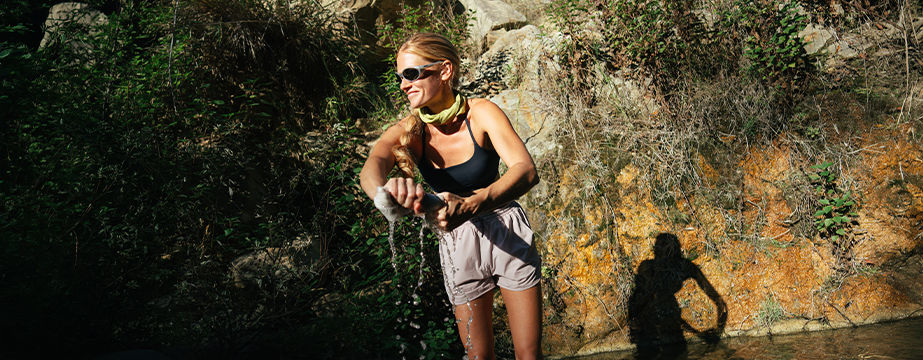
Fabric performance becomes more noticeable the longer you’re on the trail.
During climbs, sweat builds. During descents or wind exposure, that moisture cools. Fabrics that dry quickly reduce how long you stay damp.
Synthetic materials move moisture efficiently and dry fast, which helps during repeated climbs. Merino blends provide more stable comfort over longer distances, especially when conditions vary.
Cotton absorbs moisture and holds it, which leads to a heavier feel and slower drying.
When evaluating fabrics, focus on how they perform over time:
These differences become more noticeable the longer you’re out.
When deciding what features to look for in trail running gear, focus on how each piece handles movement, moisture, and changing conditions.
Fit affects how your clothing performs as your movement changes.
Trail running requires constant adjustments in stride. Clothing needs to move with you without pulling or shifting.
Here’s what to look for:
It’s easier to get the fit right before the run than to deal with friction or discomfort once you’re on the trail.
Conditions often shift during a single run.
In warm weather, heat builds quickly during climbs, especially in exposed areas. Lightweight layers help release that heat. In cooler conditions, starting slightly cool allows your body to warm up without overheating early.
Rain changes how clothing feels, especially when combined with wind.
When planning for conditions, keep the following in mind:
The right setup lets you adjust as conditions change without slowing your pace or interrupting the run.
Details matter.
Socks help manage moisture inside your shoes and reduce friction as your stride changes on uneven ground. The wrong socks can ruin your day. Hats limit sun exposure on open sections. Gloves help maintain hand warmth in wind or cold, which can make early starts and exposed ridgelines more comfortable.
These items don’t add much weight, but they can make a big difference.
Most issues build gradually during a run.
Overdressing leads to overheating during climbs. Underdressing leaves you exposed when conditions change. Fabric and fit can also create problems over time.
Here are common mistakes to avoid:
Recognizing these patterns makes it easier to adjust your setup.
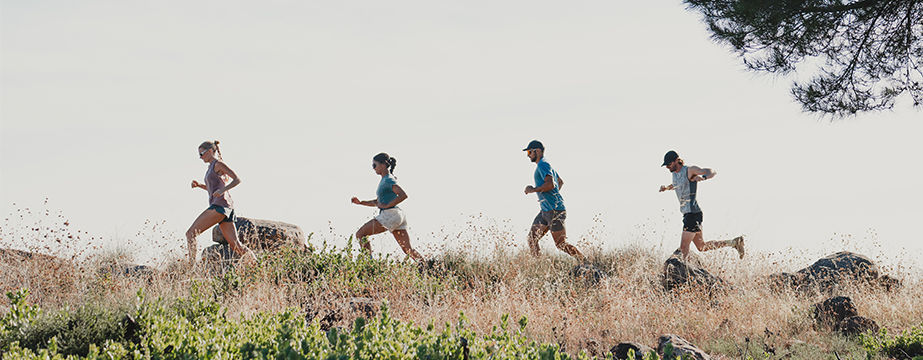
Your clothing should match the route you plan to run.
Short runs on familiar trails require fewer adjustments. Longer runs with elevation gain or exposure require more flexibility.
Think about how your body will feel later in the run.
Use this framework:
The goal is to stay comfortable as conditions change, without needing to stop and rethink your setup.
You can start with standard running clothes. As you spend more time in alpine terrain or longer routes, trail-focused clothing tends to handle movement and changing conditions more comfortably.
Conditions can change mid-run, especially with elevation or exposure. A lightweight layer gives you the option to adjust without cutting your run short.
For shorter runs on familiar trails, a simple setup like a breathable shirt and lightweight shorts is usually enough. You can adjust from there as conditions change.
Clothing that works well stays consistent. You don’t have to adjust it often, and it doesn’t become distracting as the run goes on.
More technical terrain can mean more movement and changes in elevation. Clothing that stays in place and handles variable conditions becomes more important.
Start slightly cooler than you think you need. Your body will warm up quickly once you begin climbing, which helps prevent overheating early in the run.
Trail shoes aren’t required for every run, especially on smooth paths. As terrain becomes rockier or more rugged, they provide better grip and protection, which can be important over longer distances.
Continue with chat using the message bubble


