Slide 1 of 3
Slide 2 of 3
Your Browser Is No Longer Supported. Please use an alternative browser to improve your experience and security.
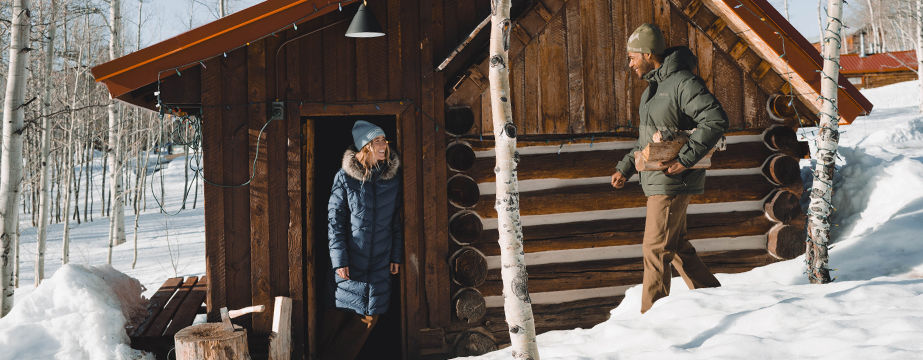
A winter jacket that feels comfortable for a quick trip across town might not provide enough warmth for hours of belaying your ice climbing partner. On the other hand, a heavy parka can have you overheating in a hurry on a mild winter day.
Learning how to choose the right winter jacket for you starts with thinking about the conditions you usually deal with. Insulation matters, but so does the outer fabric, fit, length, activity level, and time spent outside. What to look for in a winter coat depends on your typical winter weather and how you plan to use it, not the forecast on any given day.
Before comparing individual jacket features, ask yourself a few questions about how you plan to use your coat:
Your answers will help you decide which features matter most as you compare winter jackets.
A jacket doesn’t create heat on its own. Its insulation traps air close to your body and slows heat loss. This is why puffer jackets keep you warm. The fill needs enough loft, or puffiness, to hold those small pockets of air.
The outer shell, fit, and coverage also affect how well a jacket performs in the cold. A loose hem or collar can let chilly air enter, while a tight fit may flatten the insulation. More coverage can also help reduce exposure around the hips and upper legs, especially in cold wind.
The Emberous Jacket brings these features together for everyday winter use. It uses 700-fill recycled down treated with Down Defender, which helps the down keep its loft in damp conditions. A wind-resistant recycled polyester shell and C0 DWR finish help manage wind and light moisture, while an insulated hood and fleece-lined torso add comfort in everyday cold-weather conditions.
Different types of winter coats use insulation in different ways. Down, synthetic, and hybrid insulation each offer a different balance of warmth, weight, moisture resistance, and packability. The right choice depends on your climate, daily routine, and how much time you normally spend outside.
Down insulation is light, warm, and easy to pack. Down can provide plenty of loft without adding as much weight as many insulation materials. This can make a down jacket comfortable for commuting, travel, and long days when you don’t want to carry a heavy coat.
Down performs best when it stays dry and fully lofted. Some treatments help it resist dampness and light moisture, but the outer shell still matters during wet snow, sleet, or rain.
Synthetic insulation often performs better than untreated down when conditions are damp. It also tends to dry faster and can continue to provide insulation after some exposure to moisture.
Synthetic fill is also well suited to parts of a jacket that bend and move often. The tradeoff is that it may need to be heavier or thicker to provide the same level of insulation as efficient down. This can matter when you want a winter jacket that feels light or packs down small.
Hybrid jackets use more than one type of insulation. The GridLite Jacket, available in men’s and women’s styles, places 800-fill ExpeDRY™ RDS down around the torso for light, packable insulation. The down is treated to resist moisture, while synthetic insulation in the sleeves provides durable coverage in areas that move more often.
The jacket also uses different outer fabrics across the body. Light, wear-resistant nylon covers the torso, while 2-layer NanoPro™ fabric adds waterproof and windproof protection at the sleeves and shoulders. This balances lower weight with added protection in areas that see more exposure.
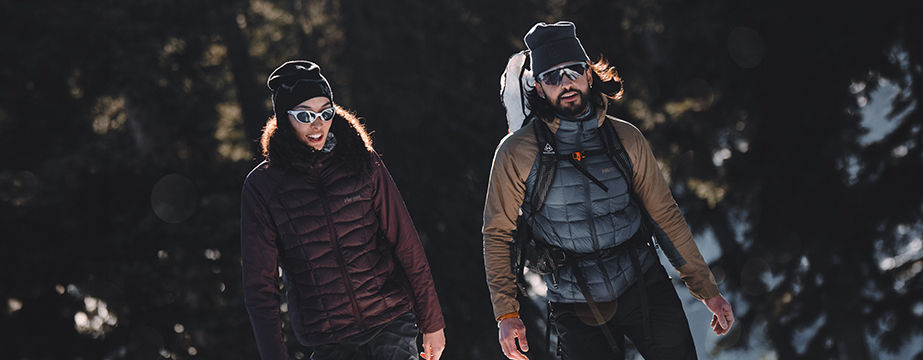
Down fill power measures how much space one ounce of down takes up when it is fully fluffed. A higher number means the down can trap more air for its weight. This often allows a jacket to provide insulation without feeling heavy or bulky.
Fill power and fill weight describe two different things. Jacket fill power tells you how lofty and efficient the down is. Fill weight tells you how much down the jacket contains. A small amount of 800-fill down is not automatically warmer than a larger amount of 700-fill down.
The GridLite Hoody, available in men’s and women’s styles, uses 800-fill ExpeDRY™ down around the torso, while the sleeves contain synthetic insulation. This means the 800-fill number describes only one part of the jacket. The amount and placement of the insulation, along with the hood, fit, length, and outer fabric, all affect how the finished jacket feels.
Insulation slows heat loss, while the outer shell helps block wind and keep moisture away from the fill. Even a well-insulated coat may feel less effective if cold wind passes through the fabric or water reaches the insulation.
A durable water-repellent treatment, known as DWR, helps water bead up and roll off the jacket’s surface. It can help during a light drizzle, passing snow shower, or short period in damp weather. However, DWR alone does not make a jacket waterproof. Stronger protection comes from a waterproof layer and taped seams that help stop water from entering through the stitching.
The Yukon Parka uses 2-layer NanoPro™ construction and fully taped seams for waterproof and windproof protection. A C0 DWR finish helps water bead off the surface. Together, these features help protect the 700-fill recycled down during rain, wet snow, sleet, and strong wind.
A water-resistant insulated jacket may be enough for dry winters, light snow, or short periods outside in damp weather. It offers some protection without the waterproof layer and taped seams used in a fully waterproof jacket.
A waterproof winter jacket is a better choice if your area regularly gets rain, wet snow, sleet, or other mixed winter weather. Waterproof materials and taped seams provide stronger protection when you may be outside for longer periods.
Think about the weather you’ll face during a normal winter, not just the coldest temperature. A few passing snow showers create different needs than regular rain and slush during a daily commute.

Most people choosing an everyday winter coat should start with their usual routine. A coat worn to work or while running errands needs to provide comfort during slower movement and periods of standing or sitting.
A jacket for more active use has a different job. It often uses lighter insulation and more breathable materials because the body creates additional heat while moving. Some jackets can work in both settings, but the way you expect to use the coat most often should guide your choice.
Everyday winter jackets often focus on insulation, wind protection, and coverage. These features become more important when your day involves more standing, sitting, and casual walking than steady activity.
Beyond insulation, consider how the coat’s length, fit, and overall bulk will work with your routine. The right balance depends on your climate and how you expect to wear the coat most often.
The Revlo Jacket, available in men’s and women’s styles, balances light insulation with airflow. It uses 40 gsm PrimaLoft® Silver insulation to provide protection from the cold without the bulk of a heavier everyday coat. The outer fabric allows some airflow while still helping reduce wind exposure.
Grid fleece adds stretch and ventilation in areas that move more. This design suits winter walks, travel, trail use, warmups, and other activities where a heavy coat could feel too warm. The hand pockets remain easy to reach while wearing a pack, and the jacket can fold into its own pocket when temperatures rise.
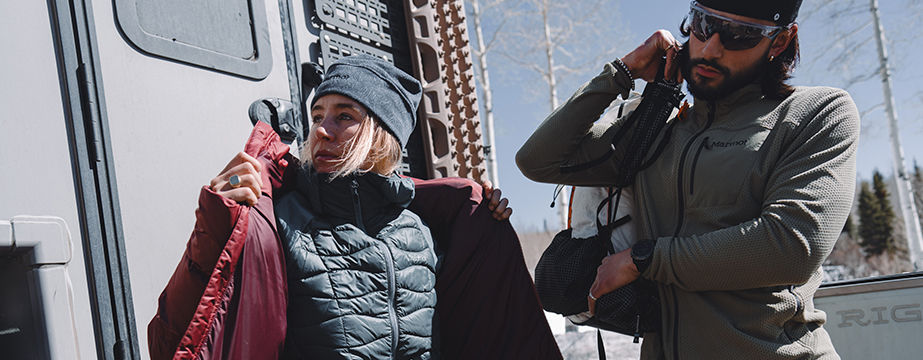
A winter jacket should leave enough room for its insulation to stay puffy and for the layers you plan to wear underneath. A jacket that is too tight may flatten the fill, crowd a fleece, and limit shoulder movement. A jacket that is too loose may allow cold air to enter through the hem, cuffs, or collar.
Try the jacket over the base layer and midlayer you expect to wear most often. Zip it fully, sit down, reach forward, and raise your arms. The sleeves should still cover your wrists, the hem should remain in place, and the hood should move with your head without blocking your view.
Do not size up automatically. How a winter jacket should fit depends on its shape and your normal layers. When shopping online, compare your measurements with Marmot’s size charts. Once you try the jacket on, make sure it closes comfortably over your winter layers without pulling across the shoulders or leaving large gaps around the openings.
Coat length affects both coverage and ease of movement. A hip-length jacket can feel less bulky when sitting and allows a more natural stride when walking. A longer winter coat covers more of the lower body, which can be useful when protection from cold and wind matters more than keeping bulk to a minimum.
The Emberous Long Coat provides extended coverage while still allowing room to move. Its two-way front zipper can open from the bottom, creating more space when sitting or climbing stairs.
Many winter jacket buying mistakes happen when people focus on one feature instead of the complete design. A high fill-power number, thick insulation, or long hem may suggest warmth, but none of these details tells you how the jacket will perform in your real-world winter use.
Common mistakes include:
The Emberous Coat combines 700-fill recycled down, a wind-resistant shell, a C0 DWR finish, and an insulated hood. Those features make sense for everyday winter use in cities and cold mountain towns. The goal is not to choose the coat with the most insulation or coverage. It is to choose one that fits the weather and daily use that’s right for you.
Winter comfort comes from the way insulation, weather protection, fit, coverage, activity level, and time outside work together.
Think about your usual weather and routine. Then compare fill power, shell materials, fit, and length. This makes it easier to choose a winter jacket for what you’ll actually do this winter rather than simply reaching for the thickest or longest option.
No single material determines which winter coat is warmest. Down can provide plenty of insulation without much weight, while synthetic insulation often performs better in damp conditions. The amount of fill, shell protection, fit, and coat length also affect how a coat feels.
Yes, as long as the shell leaves enough room for the insulated jacket to stay puffy. You should also be able to move your shoulders and arms without feeling restricted. This layering system lets you adjust insulation and weather protection as conditions change.
No. A less bulky puffer jacket can still provide useful insulation when it uses efficient fill and blocks drafts around the hood, cuffs, and hem. A heavier jacket may feel better during long periods of standing or sitting outside, while a lighter option can work well for errands and more active days.
yA lightweight insulated jacket can work well when steady movement creates body heat. Look for airflow, wind resistance, easy movement, and enough room for your layers. Carry added weather protection when strong wind, wet snow, or long rest periods are possible.
Continue with chat using the message bubble


