Slide 1 of 4
Slide 2 of 4
Slide 3 of 4
Slide 4 of 4
Your Browser Is No Longer Supported. Please use an alternative browser to improve your experience and security.
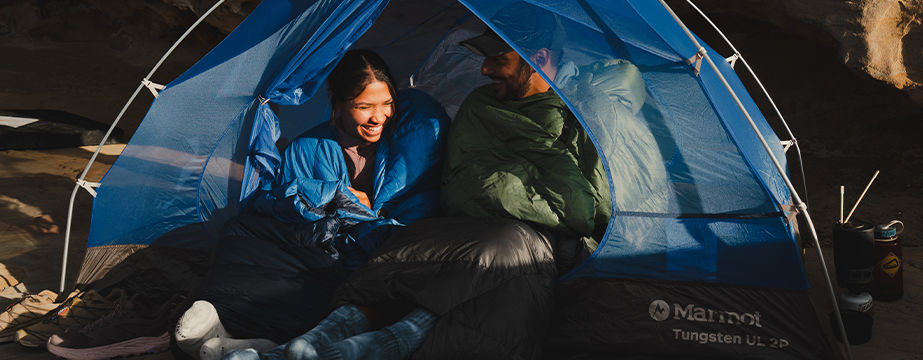
A tent shapes more of your trip than you might expect. Because shelter performance directly influences rest, recovery, and safety in changing conditions, choosing thoughtfully matters.
Start by thinking about what kind of camping you’ll be doing. A big spacious car camping tent isn’t going to do double duty for backpacking. And a four-season tent built for exposed alpine terrain is going to be small, hot, and overbuilt for weekend camping with the kids. At its core, selecting a tent comes down to size, weight, interior comfort, reliable weather protection, and durability.
When the tent’s season rating, features, materials, and weight align with how you like to camp, it lets you focus on the fun stuff.
Atentshould support your trip, not complicate it. You don’t want to be adjusting guylines in the middle of the night or reorganizing gear to make room to sleep.
As you evaluate what to look for when buying a tent, focus on the elements that influence your experience most directly:
Buying for a single fair-weather trip is different from investing in a tent you plan to use for years. A thoughtful choice now usually means fewer compromises later.
Season ratings describe the type of conditions a tent is designed to handle.
Season rating is derived from:
Match the rating to realistic conditions rather than hypothetical extremes.
A 3-season tent is intended for spring, summer, and fall weather. These designs typically balance airflow with protection, using mesh panels and a separate rainfly to manage changing weather.
A 4-season tent is constructed for colder environments, where wind exposure and potential snow load require stronger pole architecture and more solid fabric coverage.
Most campers and backpackers choose a 3-season tent because it offers ventilation, manageable weight, and reliable storm protection for typical use. Unless you regularly camp in freezing temperatures or highly exposed alpine terrain, the added structure of a 4-season tent may not be necessary.
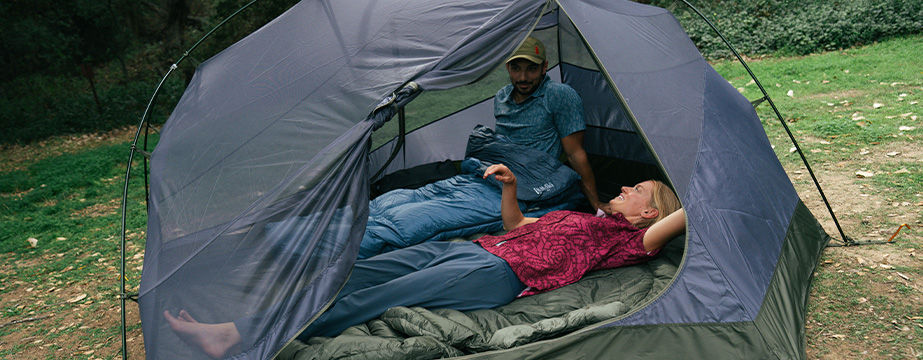
Capacity numbers refer to how many standardsleeping bagsor sleeping pads can fit side by side. They don’t take into account gear storage.
If you are comparing 3-person or 4-person tent dimensions, look closely at floor area, peak height, and wall shape. A slightly larger tent can make shared access easier and reduce the need to store gear inside the sleeping area.
Interior comfort depends on:
Design choices affect usable space. The Tungsten UL series uses pre-bent DAC poles that pull the walls outward, creating more headroom without dramatically increasing weight. TheLimestone 4-Person Tentuses zone pre-bend construction to create more vertical walls, which can feel noticeably roomier when moving around inside.
Understanding a bit about tent construction can help you predict how a tent will age.
Most tent bodies are made from nylon or polyester fabrics coated with polyurethane for waterproofing. Nylon is often used for its strong tear resistance relative to its weight. Polyester can resist UV degradation and may stretch less when wet.
Fabric thickness is measured in denier, but denier alone does not determine durability. Weave, coatings, and reinforcement at stress points matter, too.
Tent construction typically falls into two categories:
Double-wall tents are common in three-season designs because they promote airflow and help reduce interior condensation. Almost all tents are double wall.
Single-wall construction is used in some ultralight thru-hiking tent designs and sometimes in mountaineering tents.
Pole material also matters. Aluminum poles are widely used in performance backpacking tents because they offer a reliable strength-to-weight balance.
TheTungsten UL 1P,2P, and 3P models use pre-bent DAC aluminum poles along with a seam-taped, full-coverage fly and seam-taped floor. Together, these construction choices reflect a balance between durability and weight efficiency.
Tent shape influences how a shelter handles wind and how usable the interior feels.
Dome-style tents use crossing poles that create a rounded structure. This shape can distribute wind stress more evenly and often balances stability with weight savings.
Cabin-style tents use more vertical walls to maximize interior height and usable floor space. They can feel roomier at camp but may present more surface area to wind.
When evaluating tent shape, consider:
Shape is not better or worse on its own. It works in combination with pole structure and materials.
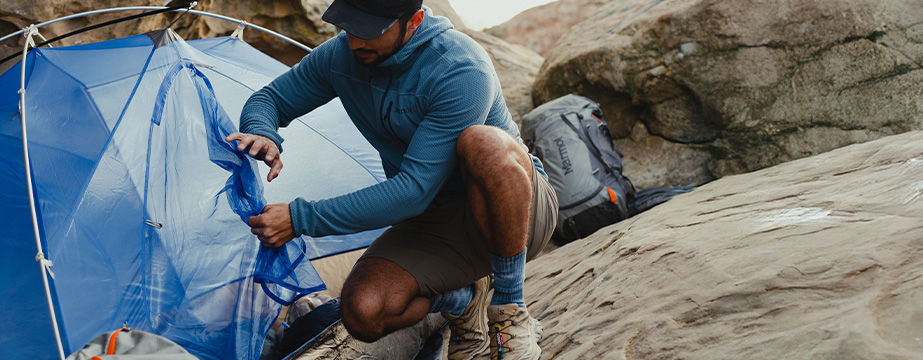
Weight matters most when you’re carrying your shelter.
Backpacking tentsprioritize trail weight and compressibility.Car camping tents, on the other hand, may prioritize space and features because they’re transported in a vehicle where weight’s not an issue.
When comparing how much tents weigh, note whether you are looking at minimum weight or packed weight. Minimum weight typically includes the tent body, poles, and rainfly. Packed weight adds stakes and storage sacks.
Consider:
The Tungsten UL 2-Person Tent balances lightweight construction with livability features such as dual doors, dual vestibules, and interior storage pockets. These details show that weight savings do not have to mean stripped-down functionality.
Setup gets more and more important as conditions worsen.
Freestanding tents can hold their shape with the pole structure before being staked. Even so, stakes and guylines are still essential for stability in wind.
Features that simplify pitching include:
Setting up in the rain or dark is when intuitive pole architecture and clear fly orientation will matter most.
TheVapor 2-Person Tentuses a color-coded clip and pole system along with added guyouts on the fly. These details help stabilize the tent in wet or windy conditions while keeping setup straightforward.
Most modern tents are designed to resist rain through coated fabrics and sealed seams, but performance depends on setup and exposure.
A full-coverage rainfly extends low along the tent body and typically provides more protection from wind-driven rain than partial designs. Fly vents help balance protection with airflow, especially in humid conditions.
To help protect your tent from rain:
Wind resistance depends on tent shape, pole configuration, and how well the tent is tensioned. Dome-style designs with multiple pole intersections can help distribute wind stress more evenly than tall, flat-walled structures.
Both the Vapor 2-Person Tent and3-Person Tent include a seam-taped, full-coverage fly with a top vent and additional guyouts, plus outer walls that extend to the ground. These are storm-oriented construction choices intended to improve protection in exposed conditions.
Condensation forms when warm, moist air inside the tent meets cooler surfaces. It’s common, especially in humid or cold weather or near water sources.
Ventilation helps reduce moisture buildup. Mesh panels and adjustable vents allow air to circulate and moisture to escape.
If condensation is a concern, look for:
The Tungsten UL line uses a full mesh upper canopy to promote airflow in warmer conditions.
The Vapor 2-Person Tent combines a full-fabric canopy with a top vent and two half-mesh doors.
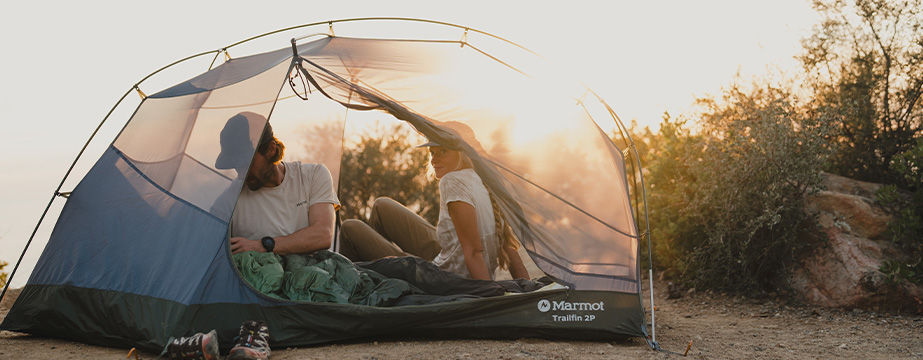
Once the fundamentals are decided, then you can consider the details. Consider:
Several Marmot tents have a lampshade pocket that holds your headlamp overhead to create diffuse light through the tent. Features like this don’t change the tent’s rating on paper, but they can make evenings at camp a bit more comfortable.
For larger groups, theHalo 6-Person Tent illustrates how layout affects flow. An oversized double-door and a side D-shaped door mean you won’t have to climb over everyone if you have to get up in the middle of the night, while a large front vestibule and interior pockets can help keep your gear organized.
Durability is influenced by both construction and care.
Drying your tent fully before storing it, cleaning off debris, and avoiding unnecessary UV exposure can help maintain performance over time. Basic maintenance supports longevity more effectively than any single feature.
Some models, such as the Vapor 2-Person Tent, include a pole repair tube in the stake sack. Small additions like this can be a lifesaver in the field when needed.
If you want to narrow your options quickly:
Choosing a tent requires understanding how structure, materials, and design respond to real conditions. When those elements align with where and how you camp, your shelter becomes dependable rather than demanding.
Tent weight varies based on size, materials, and intended use. Backpacking tents are designed to minimize trail weight and are typically lighter and more compact than car camping models. Car camping tents often weigh more because they prioritize interior space and comfort.
When comparing options, check whether the listed weight reflects minimum weight or packed weight.
Most modern tents use coated fabrics and seam sealing to resist rain. Performance depends on proper setup, site selection, and realistic exposure. A full-coverage rainfly and properly tensioned guylines help manage staying dry in sustained rain.
A tent vestibule is the covered area outside the main sleeping space, created by the rainfly. It provides sheltered storage for boots, packs, or wet gear without taking up floor space inside the tent.
Look at pole material, seam construction, and rainfly coverage. Lightweight aluminum poles, seam-taped floors and flies, and reinforced guyout points are commonly associated with more durable construction. Ease of setup and smooth hardware also signal thoughtful design.
Tents are designed to resist rain, but setup and site selection are critical. Sustained rain, wind-driven precipitation, and pitching in low areas can increase the risk of water intrusion. Proper tensioning of the rainfly and staking help reduce that risk.
Tent color can influence interior brightness and heat absorption. Lighter colors may feel brighter inside during the day, while darker colors can create a dimmer interior. In most cases, color is a preference decision rather than a major performance factor.
Continue with chat using the message bubble


